Every fall, hundreds of thousands of retirees and remote workers pack up and head south to escape the northern winter — a migration so predictable it has its own name: snowbirds. If you’re planning to spend November through April in Florida, Arizona, or another warm-weather state, shipping your car instead of driving it is often the smarter move. It saves wear on your vehicle, skips a 1,200-mile drive each way, and gives you flexibility if your travel dates change.
This guide covers everything you need to know about snowbird car shipping: when to book, what routes cost, how to choose a carrier, and the tips that save most people $100-$300 on a roundtrip.
When to Book Snowbird Car Shipping
Timing is the single biggest factor in snowbird shipping cost. The October-November window is the most competitive, with plenty of carriers moving south and rates at their most reasonable. Wait until December, and you’ll compete with thousands of other snowbirds for the same carrier slots — prices rise fast.
- September-October: Best time to book. Carriers are positioning south, rates are low, and you have the most flexibility on pickup dates.
- November: Still reasonable, but book at least 2-3 weeks in advance. Demand picks up significantly after Thanksgiving.
- December-January: Peak snowbird season. Prices are at their highest for southbound routes. Expect to pay 15-25% more than the fall rate.
- February: The quietest month. Some carriers are returning north, and southbound demand eases. Good time for latecomers to book at lower rates.
- March-April: Snowbirds returning north. Northbound demand spikes; southbound routes become cheap again.
Rule of thumb: Book at least 2-3 weeks before your desired pickup date in October and November, 3-4 weeks in December and January.
Most Popular Snowbird Car Shipping Routes
The busiest snowbird corridors run from the Northeast and Midwest to Florida, with secondary routes to Arizona and the Carolinas. Here are the most common:
- New York to Florida — ~1,300 miles, one of the highest-volume routes in the entire US auto transport industry
- Michigan to Florida — ~1,300 miles, Detroit-area retirees are among the most consistent snowbird shippers
- Ohio to Florida — ~1,100 miles, strong demand throughout November and December
- Pennsylvania to Florida — ~1,200 miles, heavy volume from the Philadelphia corridor
- Illinois to Florida — ~1,200 miles, Chicago-area snowbirds often ship in October before the first freeze
- New Jersey to Florida — ~1,200 miles, one of the most competitive routes due to high carrier availability
- Massachusetts to Florida — ~1,500 miles, popular among Boston-area retirees heading to the Gulf Coast
Because so many carriers run these routes seasonally, southbound rates in October and November are often lower than you’d expect for the distance.
How Much Does Snowbird Car Shipping Cost?
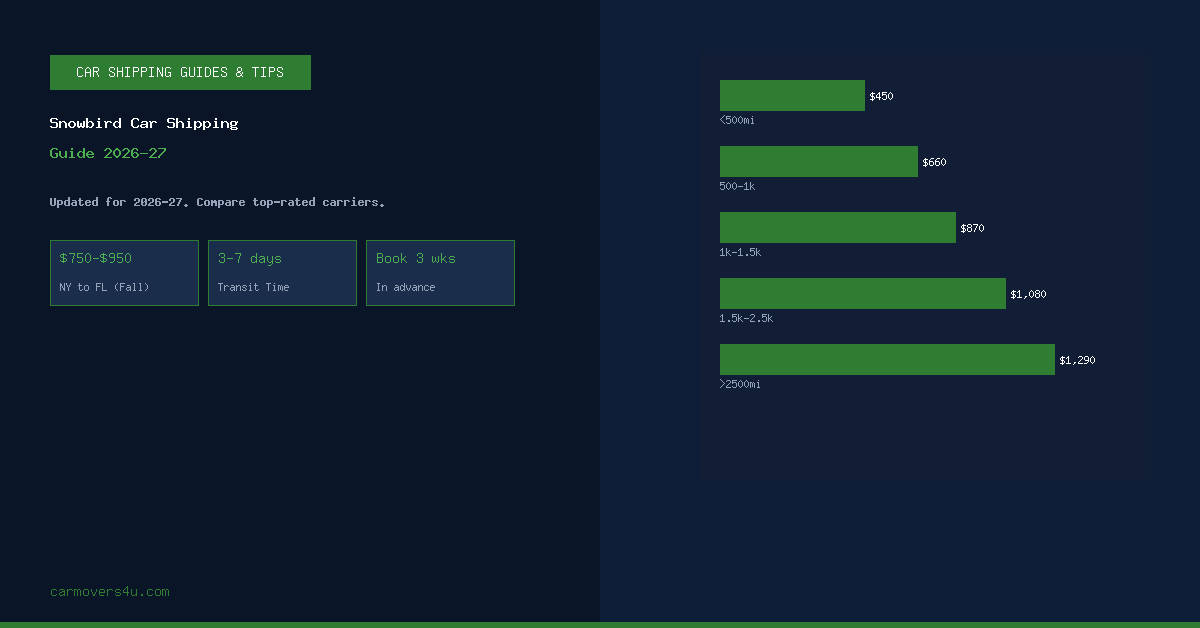
Costs vary by route, pickup flexibility, vehicle size, and the month you ship. These are typical ranges for open transport (the standard option) in 2026:
| Route | Distance | Oct-Nov (Fall) | Dec-Jan (Peak) |
|---|---|---|---|
| New York to Florida | ~1,300 mi | $750-$950 | $900-$1,150 |
| Michigan to Florida | ~1,300 mi | $750-$950 | $900-$1,150 |
| Ohio to Florida | ~1,100 mi | $700-$850 | $850-$1,050 |
| Pennsylvania to Florida | ~1,200 mi | $700-$900 | $850-$1,100 |
| Illinois to Florida | ~1,200 mi | $750-$950 | $900-$1,100 |
| Massachusetts to Florida | ~1,500 mi | $850-$1,050 | $1,000-$1,250 |
Enclosed transport costs 40-60% more than open transport. For most snowbirds shipping a standard sedan or SUV, open transport is perfectly safe and the right choice.
Open vs. Enclosed Transport: Which Should Snowbirds Choose?
The vast majority of snowbirds use open transport — the same multi-car carriers you see on the highway hauling 8-10 vehicles at once. It’s safe, reliable, and significantly cheaper.
Enclosed transport is worth considering if you’re shipping a luxury vehicle (above $60,000), a classic or collectible car, or a low-clearance sports car. The enclosed trailer protects against weather, road debris, and prying eyes at rest stops. For a standard car or SUV driven daily, open transport is the standard choice of experienced snowbird shippers.
How to Prepare Your Car for Snowbird Shipping
- Document existing damage with photos and video — walk around the vehicle and record any existing scratches, dents, or chips before the driver arrives. Date-stamp the photos.
- Leave a quarter tank of gas — enough for loading and unloading, but not so much that the extra weight adds to your cost.
- Remove personal items from the vehicle — carriers are not licensed to transport household goods, and items left inside are not covered by insurance.
- Disable your alarm — a car alarm that triggers during transport creates problems for the driver.
- Remove or retract your antenna — extended antennas are frequently damaged on open carriers.
- Turn off your EZ-Pass or toll transponder — or place it in a signal-blocking bag so you’re not charged for tolls you didn’t drive.
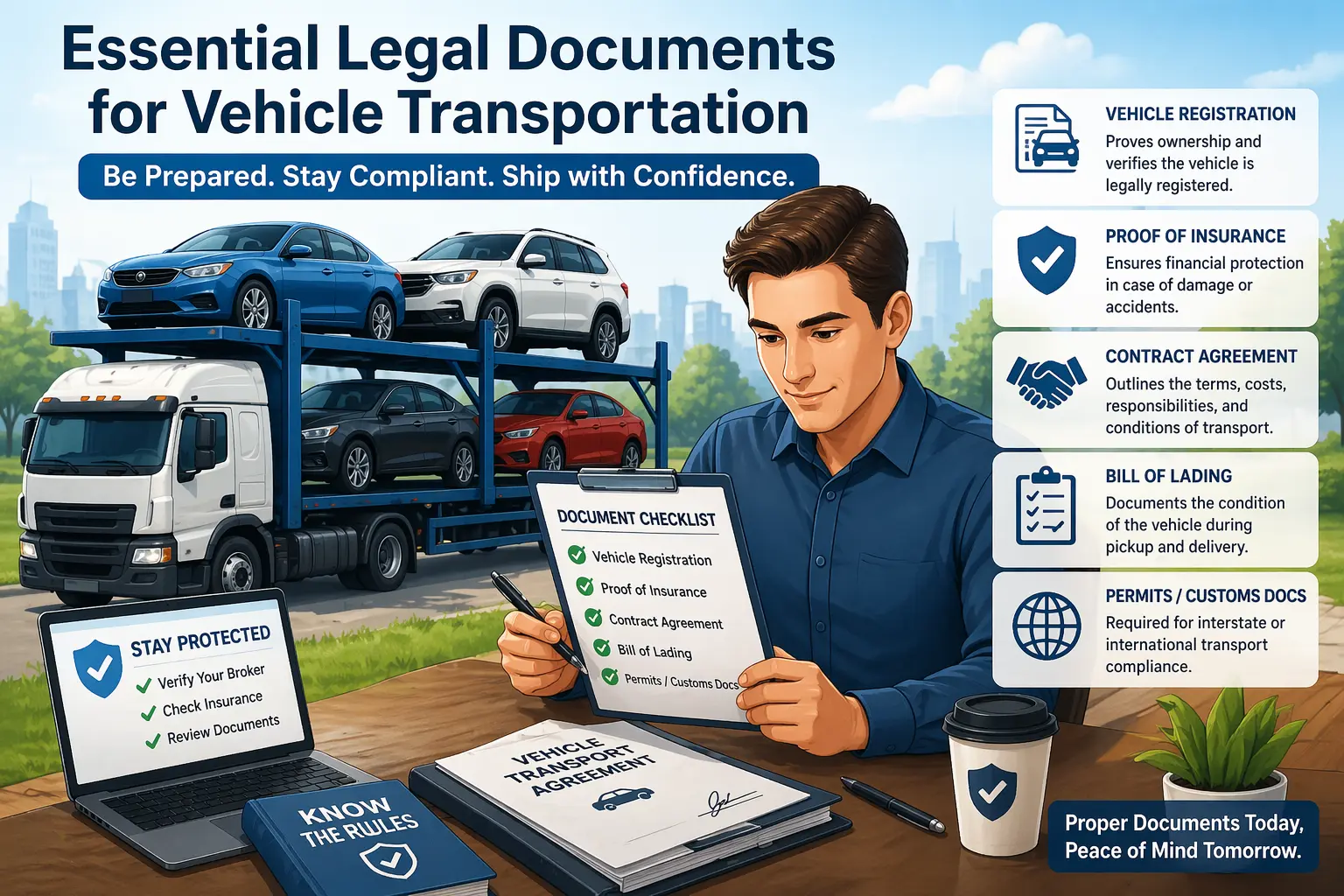
- Inspect with the driver at pickup — both you and the driver sign a Bill of Lading noting the vehicle’s current condition. Keep your copy.
5 Tips to Save Money on Snowbird Car Shipping
- Be flexible on your pickup window. Carriers build routes based on available vehicles. If you can give a 3-5 day pickup window instead of a specific date, you’ll almost always get a lower quote.
- Book in September or October. Locking in a rate 6-8 weeks before your travel date gives you access to early-bird pricing and more carrier options.
- Use a terminal if available near you. Door-to-door service is most convenient, but dropping off and picking up at a terminal (a carrier’s lot) can save $50-$100 each way on some routes.
- Get at least 3 quotes. Rates vary between carriers and brokers. Use a comparison service to get multiple quotes and let them compete for your business.
- Ship with a neighbor or community group. Many snowbird communities informally coordinate shipping — if you and a neighbor on the same street both need a car shipped south, a carrier may offer a small discount for the guaranteed double pickup.
Booking Your Return Trip North
Most experienced snowbirds book their spring return trip at the same time as the fall southbound shipment. Northbound demand spikes in March and April when everyone returns. Booking in advance locks in a lower rate.
Typical northbound (Florida to Northeast) pricing in March-April runs $750-$1,050 depending on the route, slightly lower than peak southbound rates because southbound demand has eased by then.
Compare Car Shipping Companies for Your Route
Not all carriers serve every snowbird route with the same frequency. Getting quotes from multiple top-rated auto transport companies ensures you get the best combination of price, timing, and reliability.

Mile Auto Transport
Nationwide vehicle shipping with quote-based pricing and multi-state transport options.
Frequently Asked Questions
How far in advance should I book snowbird car shipping?
For October and November shipments, 2-3 weeks in advance is usually enough. For December and January (peak season), book 3-5 weeks ahead to secure good rates and your preferred pickup window.
Can I put items in my car when it’s being shipped?
Technically, most carriers allow a small amount of personal items in the trunk (typically under 100 lbs), but items inside the vehicle are not covered by the carrier’s insurance, and some carriers will refuse to accept the vehicle with visible loose items.
How long does snowbird car shipping take?
For the most common routes (Northeast or Midwest to Florida), transit time is typically 3-7 days. Shorter routes like Pennsylvania or Ohio to Florida tend to be on the faster end. Longer routes like Massachusetts to South Florida can take 5-8 days.
Is my car insured during transport?
Yes. Licensed carriers are required by law to carry cargo insurance. Any damage that occurs during transport is the carrier’s liability if documented properly in the Bill of Lading. Take photos before and after, and note any new damage on the delivery receipt before signing.
What’s the difference between a broker and a carrier for snowbird routes?
A carrier owns and operates the actual trucks. A broker connects you with available carriers, often giving you access to more routes and pricing options than going directly to one carrier. See our Broker vs Carrier guide for a full breakdown.


2 Responses