Transporting a vehicle requires careful attention to legal documentation. Understanding the essential vehicle transport legal documents ensures compliance, prevents delays, and protects both the vehicle owner and the carrier.
Understanding Vehicle Transportation
Understanding the legalities involved in vehicle transportation is crucial for a smooth shipping process. Auto transport brokers serve as intermediaries between vehicle owners and carriers, ensuring that all regulatory and compliance requirements are met. Their primary responsibility is to facilitate the shipping of vehicles while maintaining adherence to federal, state, and local laws. This includes verifying the credentials of the carriers, securing proper permits, and ensuring that vehicles are transported safely.
Brokers also play a vital role in managing the legal documentation needed for vehicle shipping. The shipping process necessitates specific documents that provide proof of ownership, compliance, and insurance. Brokers ensure that all parties involved have the correct legal paperwork, which facilitates a seamless transaction. They are responsible for securing documents like transport agreements, which outline the terms and conditions of the shipment, and also ensure that the carrier maintains appropriate insurance coverage.
In addition, they facilitate communication between the vehicle owner and the carrier, ensuring that both parties are informed and protected throughout the shipping process. Thus, the role of auto transport brokers is indispensable, not just in logistics but in upholding the legal framework that governs vehicle transportation, which ultimately safeguards the interests of the vehicle owner and ensures compliance with regulatory standards.
Key Vehicle Transport Legal Documents You Need
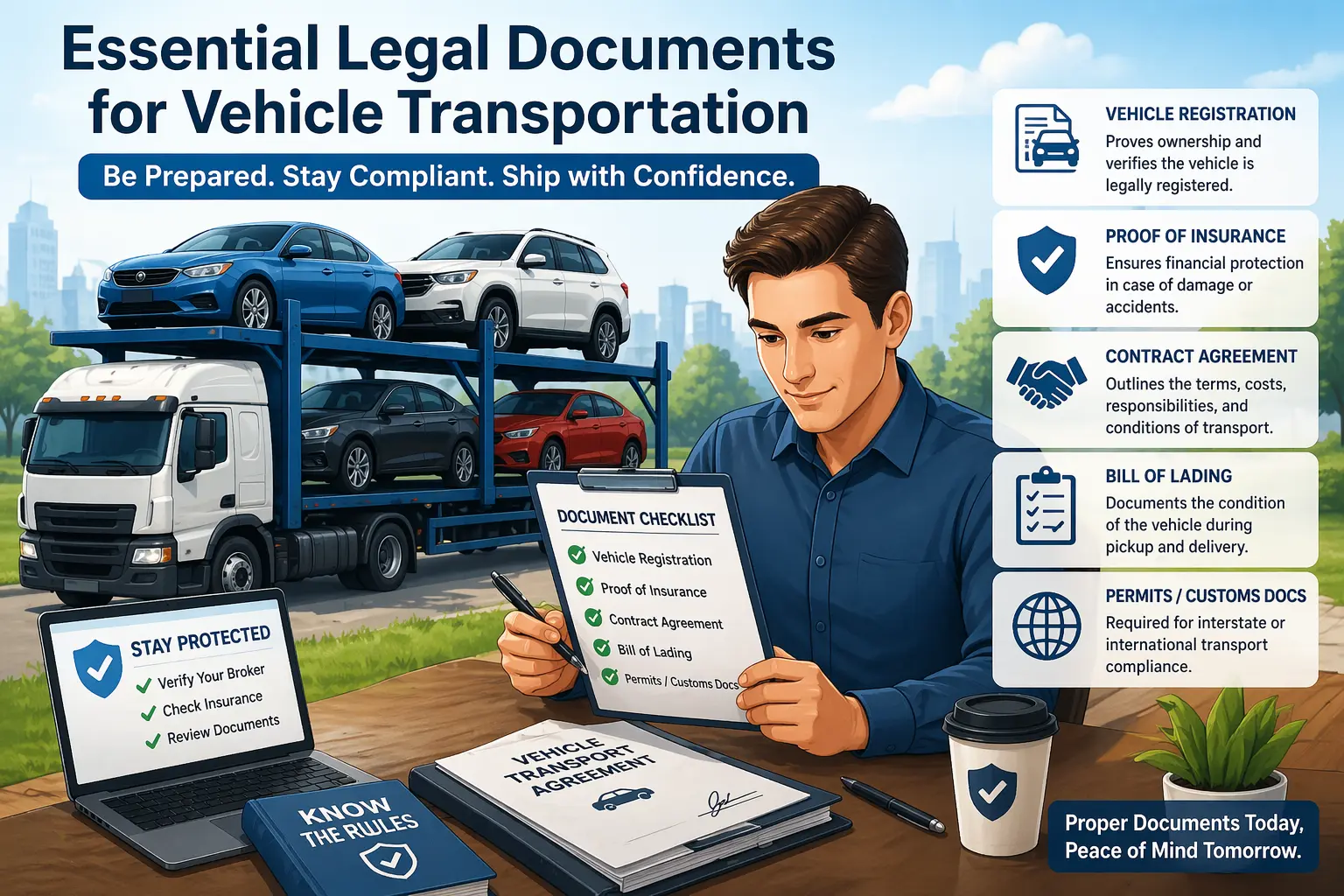
When transporting a vehicle, several key legal documents must be provided to ensure compliance and facilitate a smooth shipping process. Each document serves a unique purpose, playing a crucial role in the transaction.
First and foremost, **vehicle registration** is essential. This document proves ownership and verifies that the vehicle is legally registered in the owner’s name. It protects against disputes regarding ownership during transport.
Another critical document is **proof of insurance**. Transport brokers typically require a certificate of insurance that covers the vehicle while in transit. This ensures that, in the event of damage or an accident, financial liability is adequately handled, safeguarding both the carrier and the vehicle owner.
Additionally, comprehensive **contractual agreements** between the vehicle owner and the transport broker outline the specifics of the shipping arrangement. These agreements often include terms regarding the timeline, costs, and responsibilities of each party. Having a clear contract minimizes misunderstandings and establishes a legal framework for resolving potential issues.
Lastly, depending on the shipping route, various **permits or customs documentation** may be required, especially for international transport. These documents facilitate legal compliance across jurisdictions, ensuring that the vehicle adheres to local laws throughout its journey.
These vehicle transport legal documents ensure that the shipment is handled properly and legally.
Consequences of Incomplete Documentation
Without the proper legal documentation during vehicle transportation, serious repercussions await both the vehicle owner and the shipping broker. Incomplete paperwork can lead to significant delays, imposing financial burdens and creating a ripple effect that disrupts timelines. For instance, if a vehicle lacks valid registration proof, it can be held at border checkpoints. This not only creates frustration for the owner but may also result in additional storage fees or missed deadlines for delivery.
Fines can accumulate rapidly; some jurisdictions impose penalties for operating without complete documentation, as this is viewed as a violation of transport regulations. In one case, a vehicle owner faced a $500 fine when authorities discovered that the transport documents were missing vital signatures.
Legal disputes may arise when parties disagree over liability in an accident or damage incident due to incomplete documentation. A broker could find themselves in court, defending their practices while clients suffer financial loss as a result of inadequate prep work.
To illustrate, consider a scenario where a customer’s vehicle is damaged during transit, but the broker cannot provide proof of insurance coverage or condition reports. This could lead to a protracted court battle with no clear resolution, highlighting the vital importance of comprehensive documentation in the vehicle transportation process.
Best Practices for Vehicle Transport Documentation
Ensuring that all legal documents are in order prior to vehicle transport is vital for a seamless shipping process. Here are best practices to help you navigate this important step.
First, organize your documents methodically. Create a dedicated folder containing critical papers such as the vehicle title, registration, and insurance information. This centralized location minimizes the chances of overlooking important documents during peak transport times.
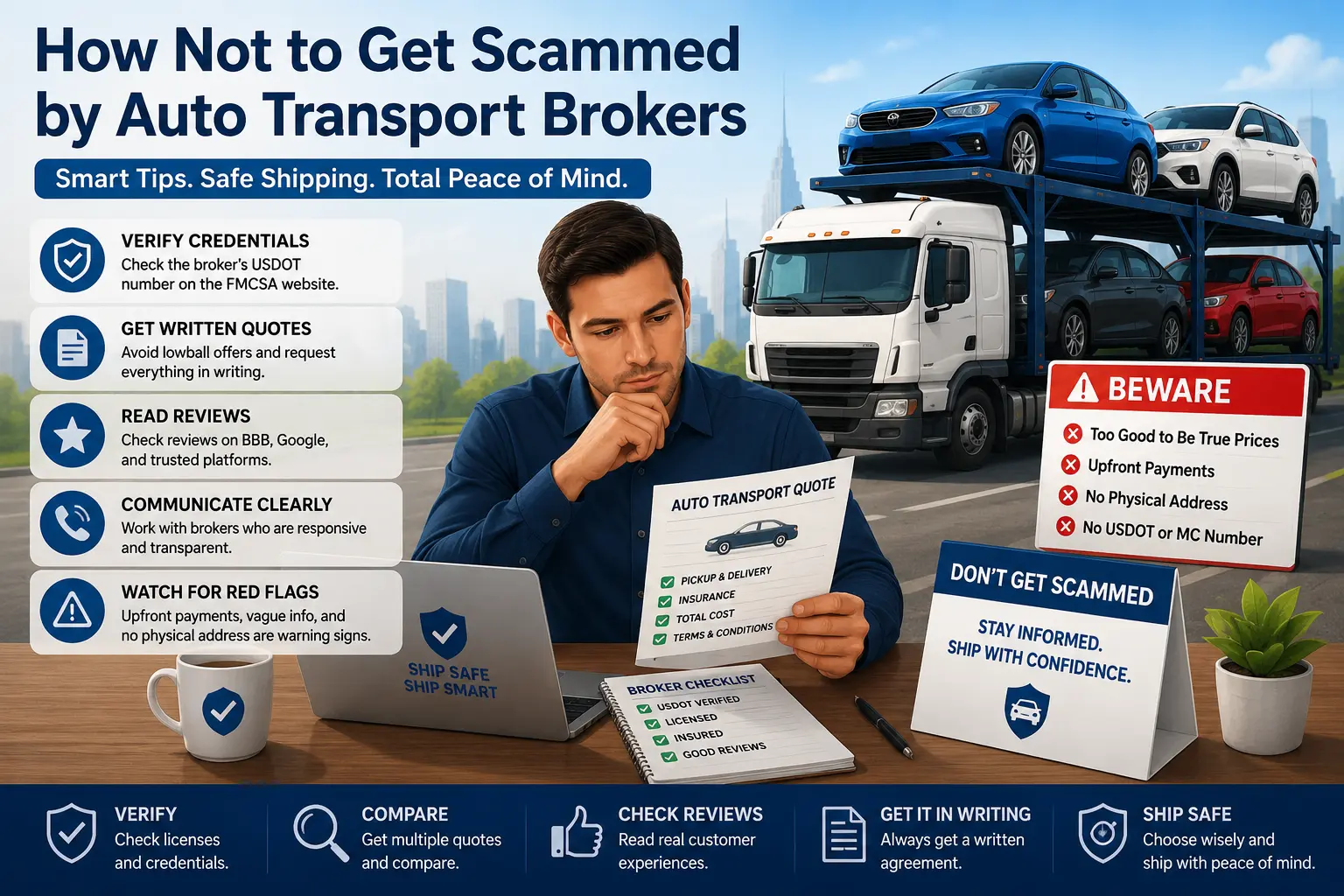
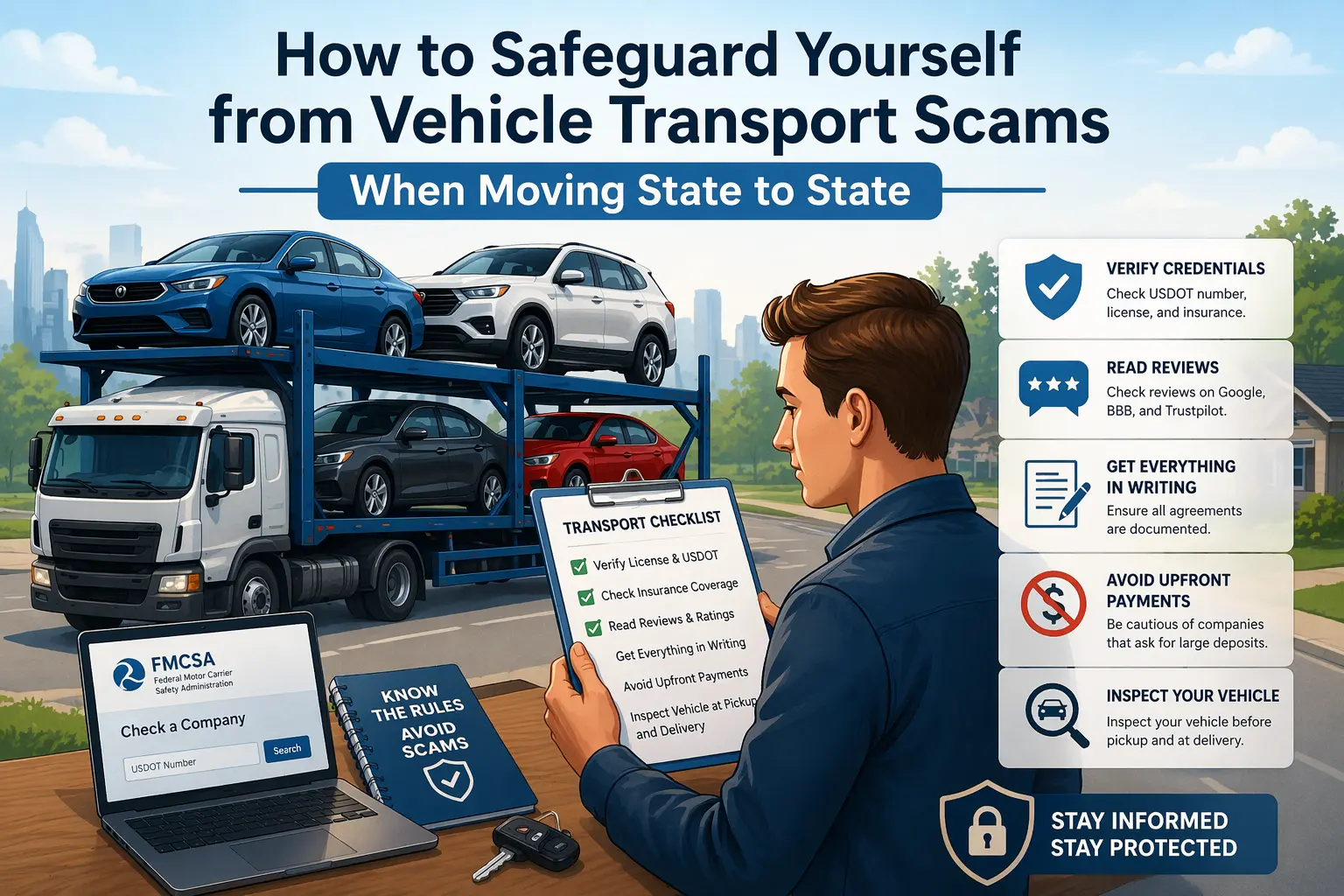
Next, verify broker credentials. Research the transportation company’s reputation by checking online reviews and consulting resources like the Federal Motor Carrier Safety Administration (FMCSA). Confirm they possess valid licenses and insurance; you can request their DOT number to verify legitimacy.
Understanding insurance requirements is another key aspect. Make sure your vehicle is adequately covered during transit. Obtain a copy of the broker’s insurance policy, noting the coverage limits and exclusions. Ensure that your own insurance policy also provides coverage during transportation to avoid potential gaps.
Lastly, don’t hesitate to communicate. Openly discuss documentation with your broker to confirm alignment on requirements. Ask questions about any unclear terms or conditions related to transport documentation, which could prevent miscommunication and potential disputes later on. By adhering to these best practices, you can better ensure a compliant and efficient vehicle transportation experience.
Having the correct vehicle transport legal documents can prevent costly mistakes and delays.
Conclusions
In summary, having the correct legal documents is crucial for seamless vehicle transportation. By understanding these requirements, you can ensure that your vehicle is shipped safely and legally, mitigating potential issues during the process.